Lovie Bolton
The Outsider (Stephen King Edition)Lovie Bolton is Claude Bolton’s mother, a warm but unsentimental presence whose family memories become crucial to the investigation of the outsider. She is more than a source of local history: her affection for Claude, recollection of the dead buried near the Marysville Hole, and direct experience of the outsider’s presence help connect the case’s supernatural rules to the human cost of the danger.
Identity and Family Life
Lovie lives with the practical limits of age and pain, but speaks of her circumstances without self-pity. She says she would be lost without Claude, who sends her money every other week and visits when he can. He would like to move her into an old folks’ home in Austin, but cannot yet afford it. She calls him the best kind of son, describing a change from an early life as a hellraiser to someone trustworthy. Her pride rests not on an idealized account of his past but on the person he has become.
Her affection shows itself in ordinary care as well as praise. Lovie distrusts roadside cafes after contracting food poisoning near Abilene in 1974, and says Claude takes over the cooking when he visits. He knows his way around a skillet and does not burn the bacon. The detail gives their bond a domestic shape: the son she once worried over now looks after her in the ways available to him, while she measures his goodness through recurring acts of attention.
The Bolton History and the Marysville Hole
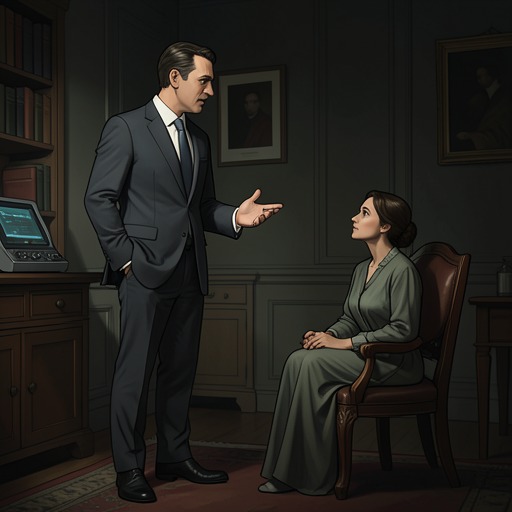
During the investigators’ conversation with Lovie, Claude leaves the house. Once he is out of earshot, she asks what they had not wanted him to hear. Her question marks a shift from the family’s everyday exchanges to the investigation’s concealed stakes: the visitors have information they need to share with her, and her loyalty to Claude will matter in deciding what happens next.
Lovie’s recollections link the family to the dead near the Marysville Hole. When the investigators ask about Roger, she suddenly realizes what the old family story means. Roger Bolton and his two sons, who were Claude’s cousins, are buried less than four miles away alongside several other men. The Jamieson twins are buried there too. Her recognition is not merely genealogical: it reveals that Claude’s family has a direct connection to the place where the investigation expects the outsider to be hiding.
She also reinterprets Claude’s absence from the family tragedy. Lovie had been angry and ashamed when he received six months in Gatesville for stealing, and she remembers that he began using drugs then. In retrospect, she sees the imprisonment as a mercy: had Claude been free and present, he would have been with his father’s relatives and the twins. His father, George, could not have gone, having already suffered two heart attacks; Claude, she believes, would have gone in his place. The memory turns a painful chapter in Claude’s life into a narrow escape from the deadly history of the Hole.
A Witness to the Threat
The investigators understand that the outsider hibernates in or near places associated with the dead, preferably places tied to the bloodline of the person it is changing into or out of. Since Claude knows that his uncle and cousins are buried by the Hole, Lovie’s family history helps explain why that location is significant. The investigators also believe Claude does not know that they have identified this connection. Ralph expects Lovie to keep quiet for Claude’s own good, trusting her to withhold the information rather than expose him to the danger prematurely.
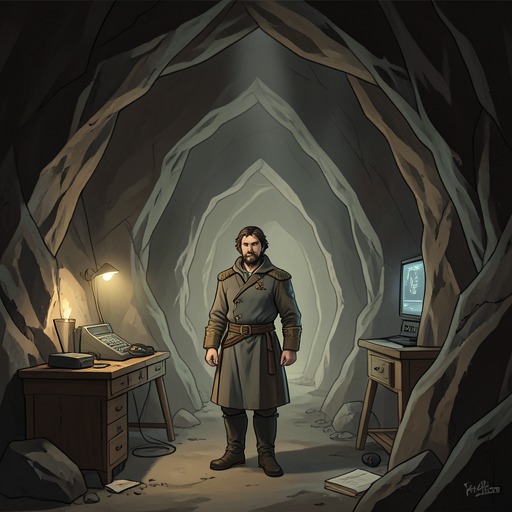
That trust is tested by what Lovie and Claude have themselves experienced. After the Marysville Hole, both have felt the outsider’s presence; Claude had sensed it even earlier as disquiet, dislocation, and the feeling of being watched. Holly interprets this as the outsider plundering his mind. Claude confirms that Holly saw it hiding in the cave. Lovie is therefore not only a keeper of inherited memories: she belongs to the group of people who have encountered the threat at close range and can help establish its impact beyond the investigators’ theories.
History Beyond the Family
Lovie’s recollections also contribute to the investigation of Chief Ahiga’s connection to Marysville. She had talked about the Ahiga side of the history, and recalled that one of the Jamieson twins dropped a plastic Chief Ahiga from his pocket. That small object becomes the starting point for Holly’s explanation of the chief’s history: after living near El Paso, he married a white woman, moved first to Austin and then to Marysville, and was accepted into the community after cutting his hair and professing Christianity. He and his wife opened the Marysville Trading Post, which eventually became the Indian Motel and Café.
The connection gives the investigators another layer of place-specific history. The shabby motel where Ralph and Holly are staying is not just a waypoint; it occupies a site associated with the chief’s family and the community’s past. Lovie does not deliver this history as a formal account, but her remembered details—especially the twin’s dropped figure—allow Holly to assemble a chain of identity, migration, and place that bears on the larger inquiry.
Aid and Aftermath
When the confrontation at the Hole leaves Yune injured, Lovie’s practical care becomes part of the immediate aftermath. She has old Percocets for back pain, and Yune takes two instead of Motrin. Claude, who learned first aid during his third and final prison term, bandages the wound while Holly explains the situation quickly, before official officers arrive. The scene brings together the family’s ordinary capacities and the crisis: Lovie supplies medication, Claude uses a skill acquired in prison, and the investigators rely on both while preparing to answer questions from the Highway Patrol.
Lovie and Claude do not respond with disbelief. Their prior sense of the outsider’s presence helps them understand what Holly is telling them, and Claude recognizes the cave as the place where Holly saw it. Afterward, Lovie thanks Holly and opens her arms for a hug. Holly, exhausted by what has happened at the Hole, accepts and stays in the embrace as long as she can. The exchange gives Lovie’s role its quiet conclusion: she has helped the investigation with memory, discretion, and care, and offers Holly the human comfort that the violence of the case has made necessary.